IN GREECE

Coin History

On this page we will make a brief historical overview of the coins used in the coinphones. The drachma is a monetary unit used by the ancient Greek world. The most famous coins were the silver didrachm of  Pheidon, the Athenian tetradrachm and the tetradrachm of Alexander the Great. Especially the Athenian tetradrachm was the most widespread currency during the heyday of Athens in the 5th century BC. until the time of Alexander the Great, when the Macedonian coins prevailed. The drachma, which for centuries prevailed in such a large part of the world, began to gradually disappear as a currency after the Roman conquests. The first time a coin with the name drachma was proposed for the new state, was on June 12, 1822. However, this happened shortly after the enthronement of Otto as king of the Greeks and his arrival in Nafplio on January 25, 1833. From then until On February 28, 2002, the drachma was the monetary unit of the modern Greek state. In public telephony and specifically in coin acceptors, the two drachma coin was first used for civil conversations and later the 5 drachma coin and finally the ten drachma coin. Coins of five, ten and twenty drachmas were used in long distance conversations depending on the duration of the conversation. The backs of the coins were printed on the telephones along with the instructions for use.

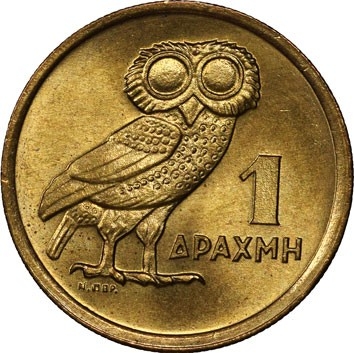
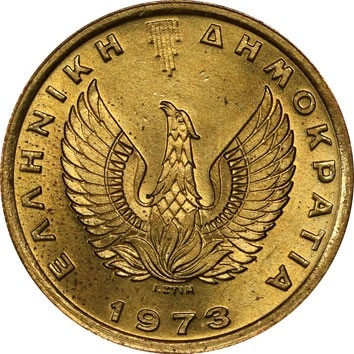
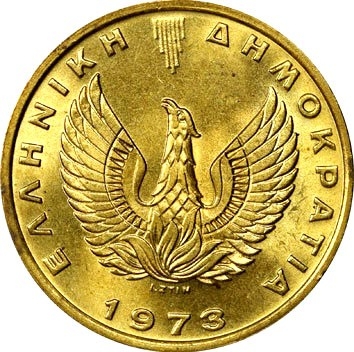
The front of the  drachma coin (1973) depicts the owl, the emblem of the city of Athens. On the back, apart from the value of the coin, the palm tree is depicted, a bird of Greek Mythology that is reborn from its ashes.

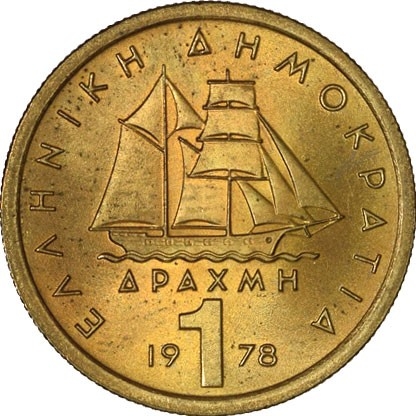
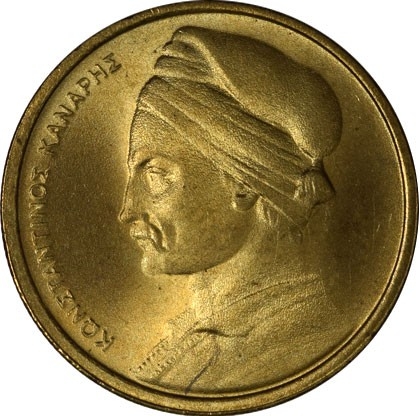
The front of the drachma coin (1976-1986) depicts Andreas Vokos, known by the pseudonym Andreas Miaoulis, was a Greek shipowner, politician and admiral, who played a leading role in the events of the Greek Revolution of 1821, as well as in the later political life of the Greek youth. The reverse, in addition to the value of the coin, depicts a 19th century ship, a corvette.

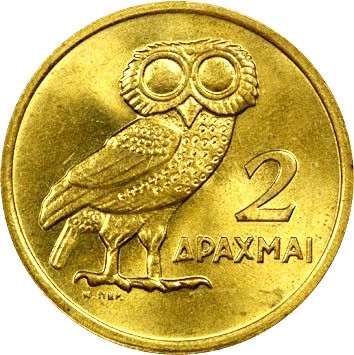
The front of the two drachma coin (1973) depicts the owl, the emblem of the city of Athens. On the back, apart from the value of the coin, the palm tree is depicted, a bird of Greek Mythology that is reborn from its ashes.

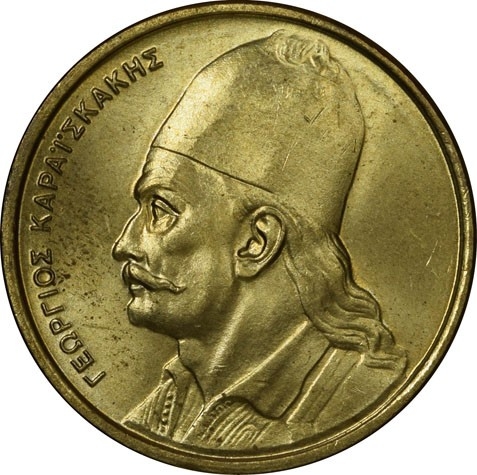
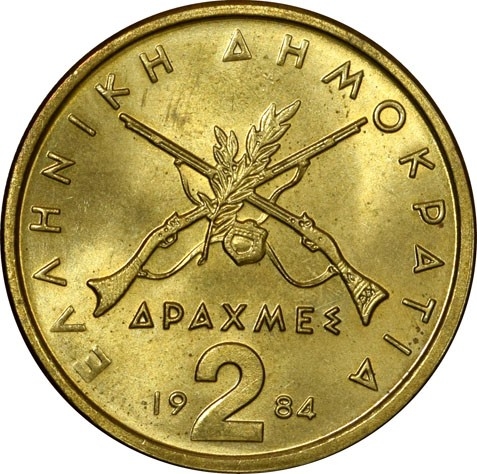
The front of the coin of the two drachmas (1976-1986) depicts George Karaiskakis, who was a Greek revolutionary and general of the Greek Revolution of 1821. On the back, apart from the value of the coin, the weapons of the Greek Revolution are depicted.

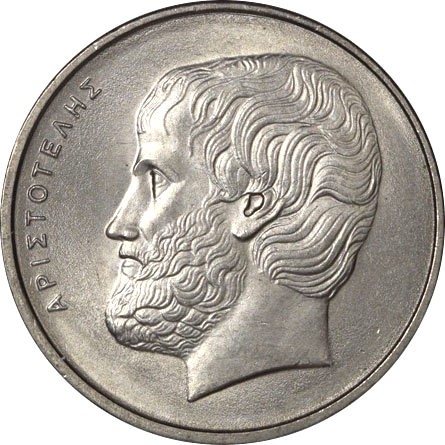
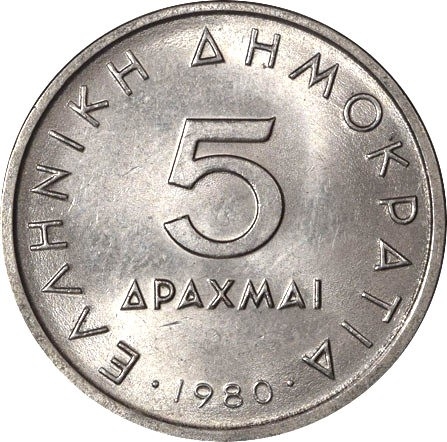
The front of the five drachma coin (1976-1986) depicts Aristotle 384 BC. – 322 BC, was an ancient Greek philosopher and scientist born in Stageira, Halkidiki, Macedonia. At the age of 17 he entered the Academy of Plato in Athens, where he remained until the age of 37. There he is associated with both Plato himself and Eudoxus, Xenocrates and other thinkers. His works refer to many sciences, such as physics, biology, zoology, metaphysics, logic, ethics, poetry, theater, music, rhetoric, politics and constitute the first complete system in Western Philosophy. The back of the coin also shows the value of the coin.

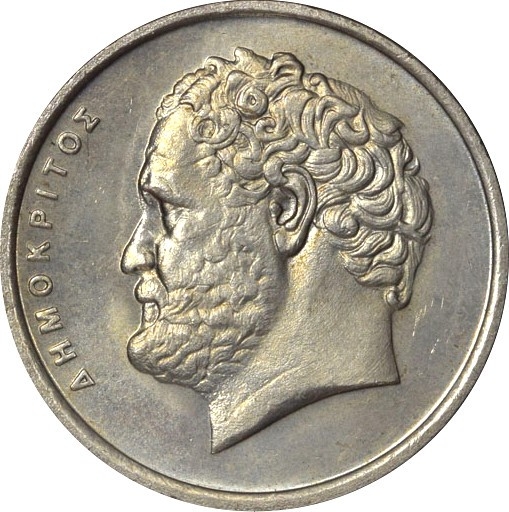
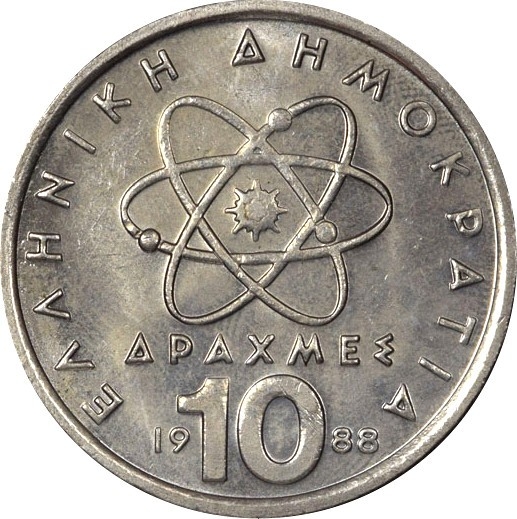
The front of the ten drachma coin (1976-2000) depicts Democritus 460 BC. – 370 BC, who was a Greek prosocratic philosopher. He was born in Abdera, Thrace. He was a student of Lefkipos. He believed that matter is made up of indivisible, invisible elements, atoms. He was also the first to realize that the Galaxy is light from distant stars. He was among the first to mention that the Universe has other worlds and even some inhabitants. Democritus clarified that emptiness is not identified with anything, that is, it is something that exists. The back shows the value of the coin.

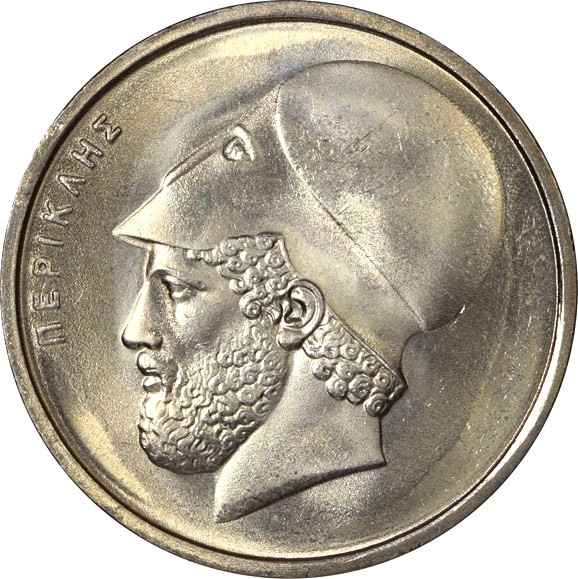
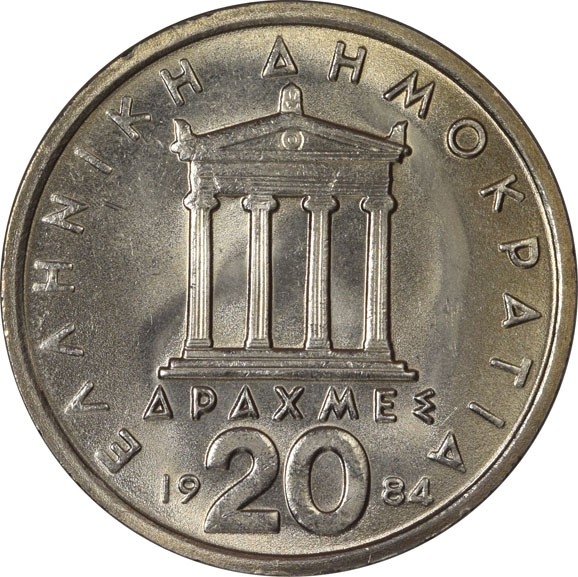
The front of the twenty drachma coin (1976-1988)  depicts Pericles of Xanthippus 494 BC. – 429 π.Χ. was an ancient Athenian Greek politician, orator and general of the 5th century BC, also known as the “Golden Age”, and more specifically of the period between the Persian Wars and the Peloponnesian War. On the back, apart from the value of the coin, the Parthenon is also depicted.

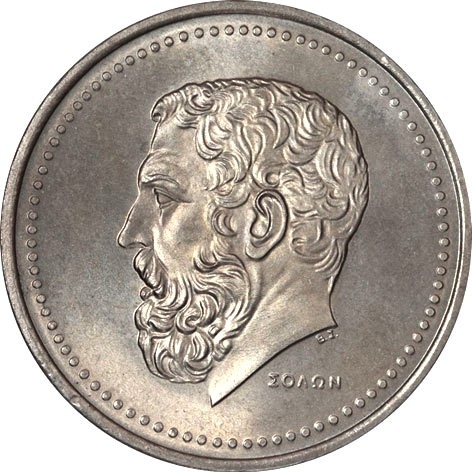
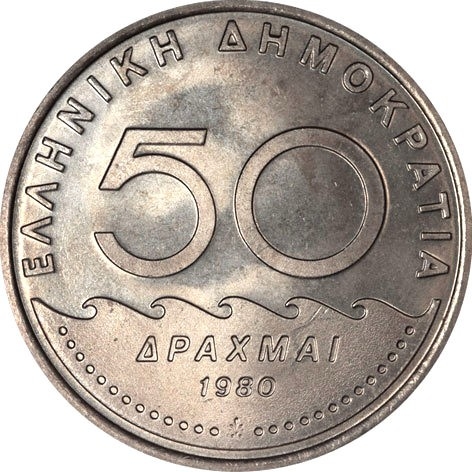
The front of the fifty drachma coin (1980) depicts Solon 639 BC. – 559 π.Χ. was an important Athenian legislator, philosopher, poet and one of the seven sages of ancient Greece. The back shows the value of the coin.

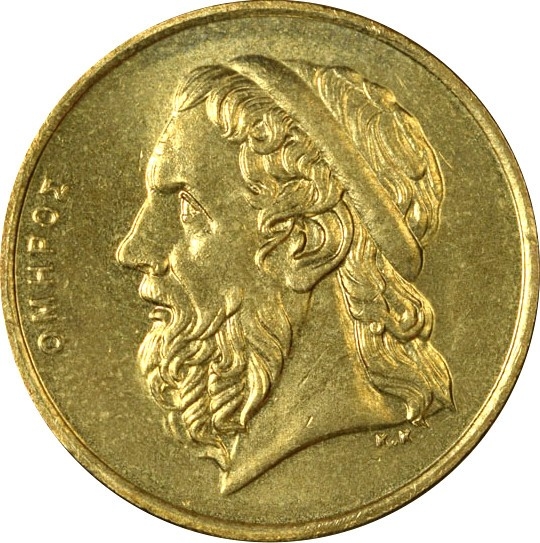
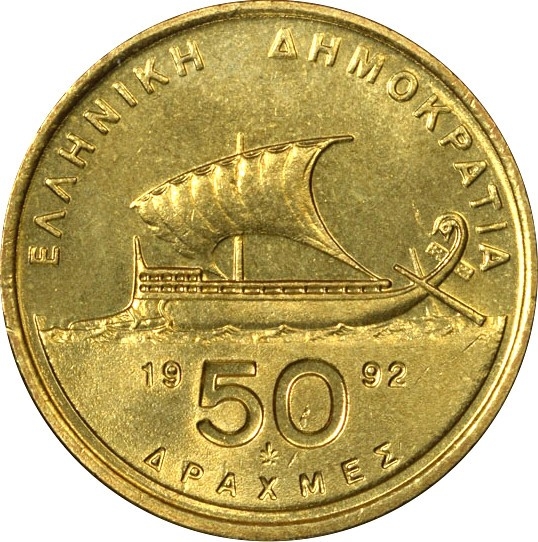
The obverse of the coin of fifty drachmas (1986-1988) depicts Homer who is the creator of the poetic works of the Iliad and the Odyssey, from the first texts of the Historical period of ancient Greece, known as Homeric Epics. On the back, apart from the value of the coin, the ship of Odysseus is also depicted.