ERICSSON-G.P.O
300
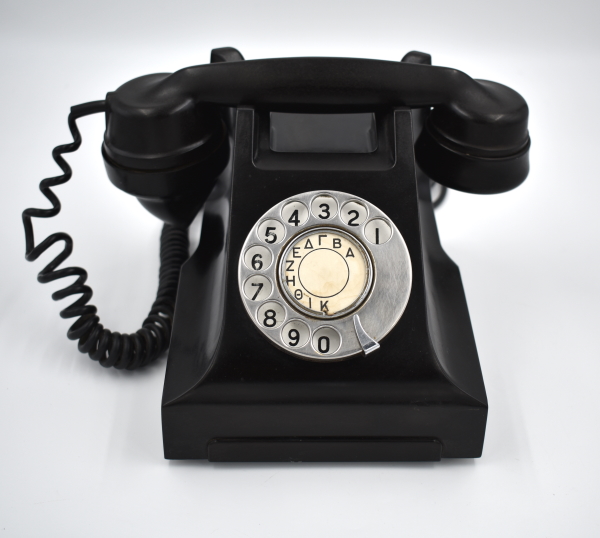
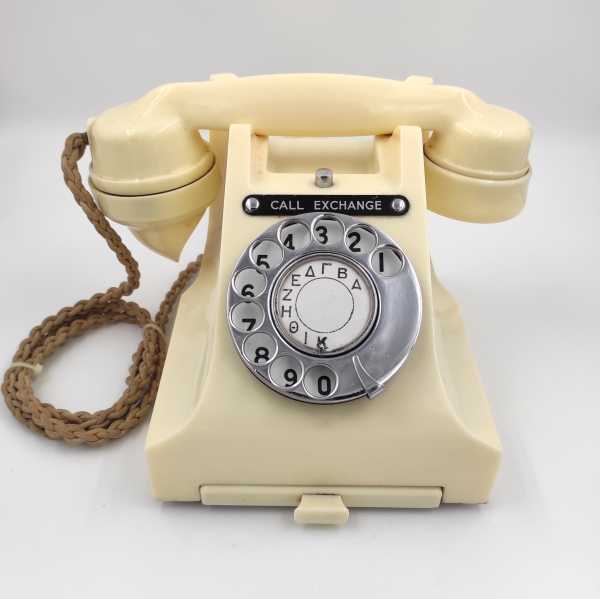
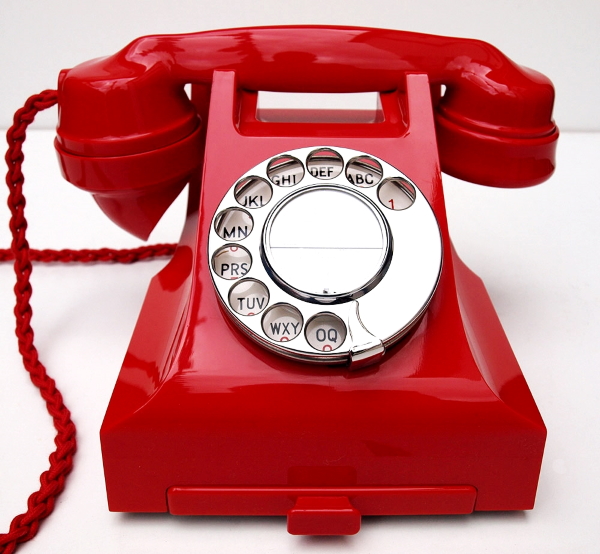
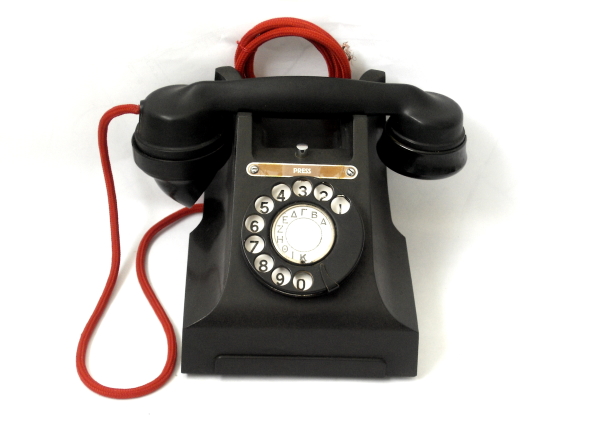
In 1930, the Swedish company Ericsson decided that it needed a new telephone device that would have a global impact. The design was commissioned by Johan Christian Bjerknes, an engineer at Oslo’s Elektrisk Bureau, an Ericsson subsidiary. He decided to use bakelite as a material, but found that he needed help with the design. He commissioned the design from a Norwegian painter, Jean Heiberg. Jean Heiberg (1884-1976) had studied in Munich and Paris. At that time he had just returned from Paris to take up a position as a professor at the National Academy of Arts in Oslo. L. M. Ericsson launched this phone in 1932 under the code name DBH1001 and later the Swedish Telephone Company adopted it as standard. The Prince of Wales, the eldest son of King George II, visited the Stockholm Fair in October 1932, where the telephone first appeared. He admired it and chose it for use in his home. The innovation was that this device had a built-in alarm mechanism. At the time, the GPO wanted to introduce a phone with a built-in bell. They created the new telephone device with the code number 332 in collaboration with Ericsson Telephones Ltd (UK). The GPO delayed until 1937 to introduce the 332 Telephone as the base model. By 1937, there were six spots in England that depicted the drawings of Norwegian painters. They were produced as desktop and wall-mounted telephones in four colors: Black, Ivory, Chinese red & Lacquer red and Jade green. In colors of Black, Ivory, Red, Green, Pink and Light Blue were used in Australia. Sky blue, pink rose, peach and light green are known to come from India made by ITI. In brown they were sold by Siemens Brothers in South Africa, probably made in Britain. The transparent models were made in Perspex for exhibitions, with chrome or nickel metal parts. These are extremely rare and valuable. Other experimental shades that appear in Britain are blue, orange and purple. Many examples given by the GEC bore a prominent portion of gold and black, claiming to be owned by the Reliance Telephone Company. Many of the above are painted. Bakelite was prepared in only the four basic colors. Also not all devices had a PULL-OUT drawer. Available in various models with additional buttons. This is the standard GPO (332) telephone that was widely produced from the early 1940s to the 1960s. As these phones are sold by other companies and used in internal telephone systems, there are many on the market. Most will have the company model number stamped on the base. The GPO used a three-digit model number (332). L.M. Ericsson, who created the type 300 phone for the GPO, had the model number stamped on the base of non-GPO phones and these normally started with an N plus at least four numbers, such as N1014. There are phones that start with L – these are ATM / ATE, while those with TEL or ST in them are GEC models. Phone 300 used the handle with code no. 164 and had new internal equipment, mounted on an internal frame. The line cable was a rear input, but many believe that this side input would be a better choice. A variety of different instruments based on this design were created to suit different purposes. Ease of installation The 300 telephone was considered to be mainly suitable for professional use. All major manufacturers have produced devices for both the GPO and their own private systems. Another common manufacturer code that appears on the headphones of these instruments is AEP made not in England but in Portugal by Automatic Electric Portugal. In Indian with the letters ITI. Other copies are marked 164 – PL35. Some replica headphones have only two terminals (instead of three), while the microphone and receiver are wired in parallel. Most British 164 headphones have an oval shape on the underside of the hand grip. It usually contains a code (eg 164 – H47) or the manufacturer ‘s emblem (eg ETL, ATE) and is always indented, with embossed letters inside the indentation. Occasionally, the letters are removed. The Irish Post tended to do this and usually engraved the letters P&T in its place. Headphones made in the UK for export to Portugal often carry APT or APTOPHONE. None of the copies look like this. Note that the colored headphones used by the GPO in 1954, 1955 and 1956 do not have a manufacturer code, only the type (164) and year. They were made by Siemens Brothers, which was the only company to make them until then. Another manufacturing company was Automatic Electric, a member of a holding company that also owned several supermarket companies such as ATM Liverpool, United Kingdom, ATEA Belgium and Autelco, Milan, Italy. There were a variety of models in the 300 series for different applications. The telephone device with code 332, is the basic model for home use. The 330 phone was intended for use on the Private Branch Exchange with a recall button for private branch exchanges. It has a single button that connects a ground to the telephone loop. Phone 312, with only a similar button, but for shared CALL EXCHANGE service lines. Finally an Ericsson N1365CB, a dialless device for non-GPO customers, but with identical circuits. In Greece they were received by the Telecommunications Organization O.T.E. A.E. from the company AUTELCO,G.E.C,ATM in color mainly black with or without recall button. They were mostly used in the Public Services of the Country. We find it very rarely in other colors.